French Frigates and Smaller Types to 1859: Photo Gallery
Click on a photo to prompt a larger view of the same image.
Frigates, 1st Rank
Souveraine
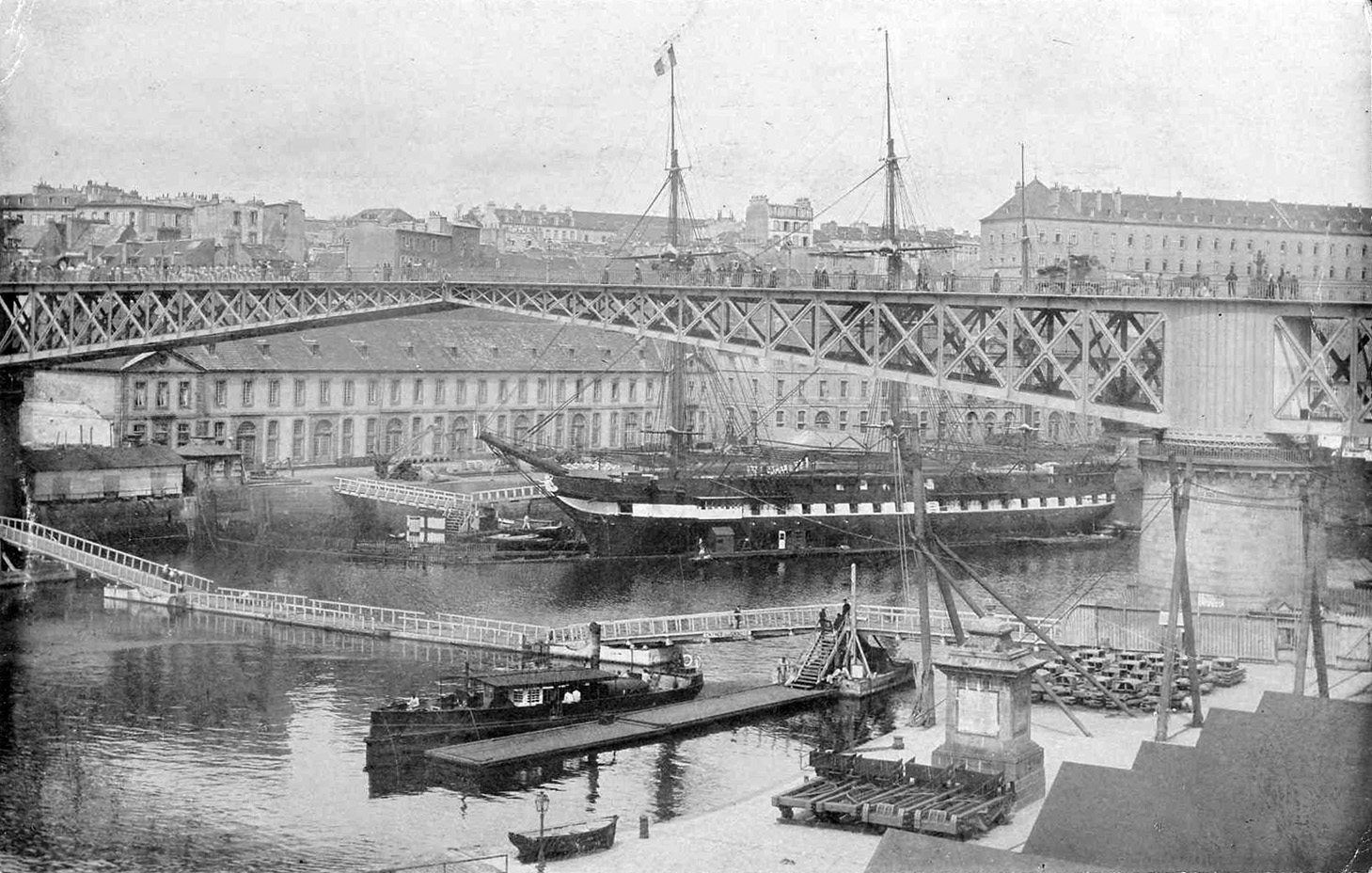
Souveraine (French steam 1st rank frigate) as a training ship at Brest behind the swing bridge. She was listed as the École de matelotage 1872-1879 and, after relieving the transport Somme as the batiment amiral, École de matelotage et batiment amiral to 1892. (Photo: Wikimedia from Archives M&M Brest 3fi017-005)
Souveraine
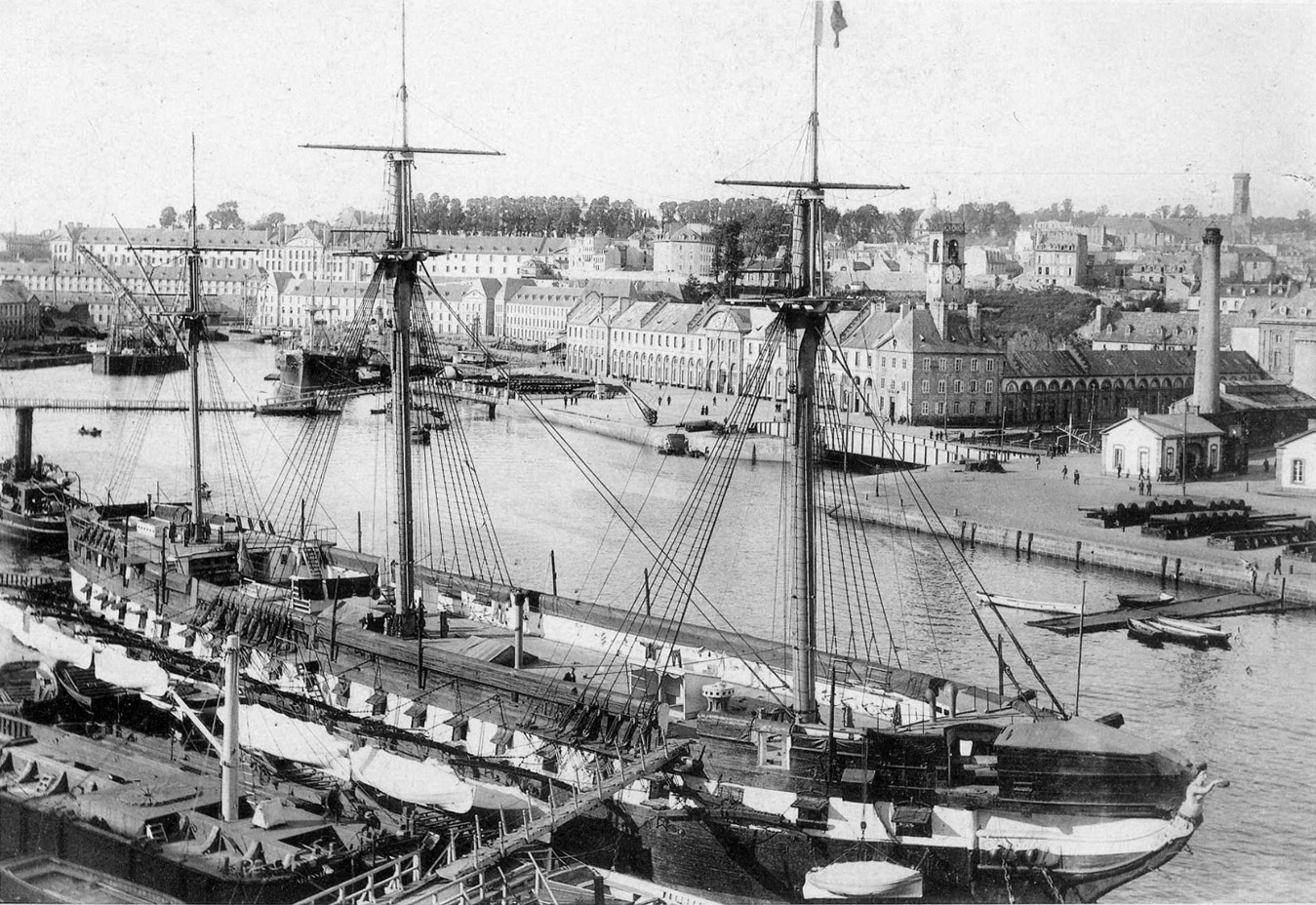
Souveraine (French steam 1st rank frigate) in a later view without her bowsprit as a seamen's training ship and base ship at Brest. (Photo: Wikipedia from Archives Finistère FRAD029 25FI 00001 10)
Guerrière
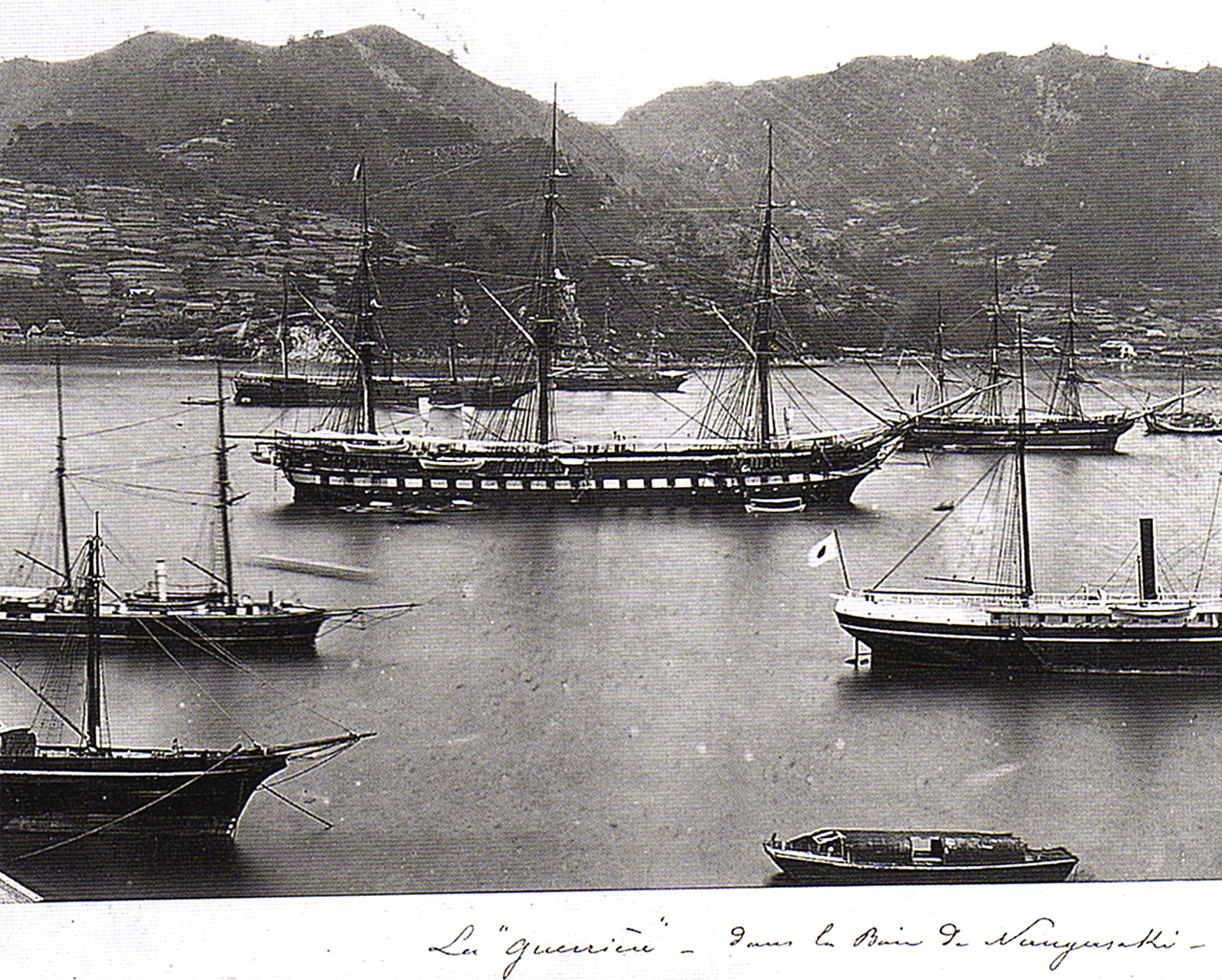
Guerrière (French steam 1st rank frigate). This ship under Admiral Roze was the lead ship in the French campaign against Korea in 1866. Here she is shown in Nagasaki harbour circa 1865. She was converted into a transport in 1868-69. (Photo: en-academic.com/pictures/enwiki/76/ LaGuerriere.jpg)
Pallas
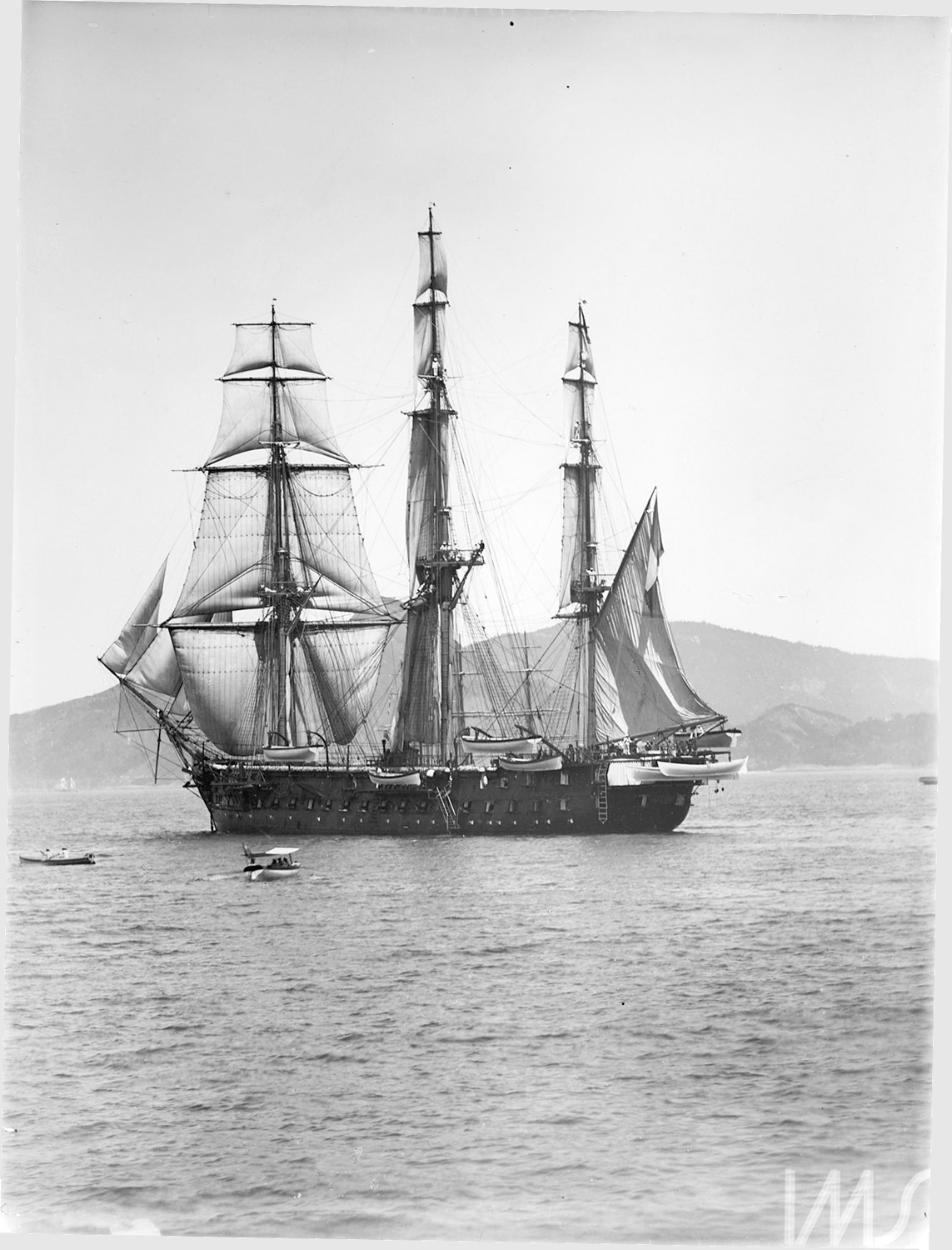
Pallas (French steam 1st rank frigate) at anchor off Rio de Janeiro with all sails raised (possibly for drying) circa 1882. Photo by Marc Ferrez. (Photo: brasilianafotografica.bn.gov.br, from the Instituto Moreira Salles)
Frigates, 2nd and 3rd Ranks
Virginie
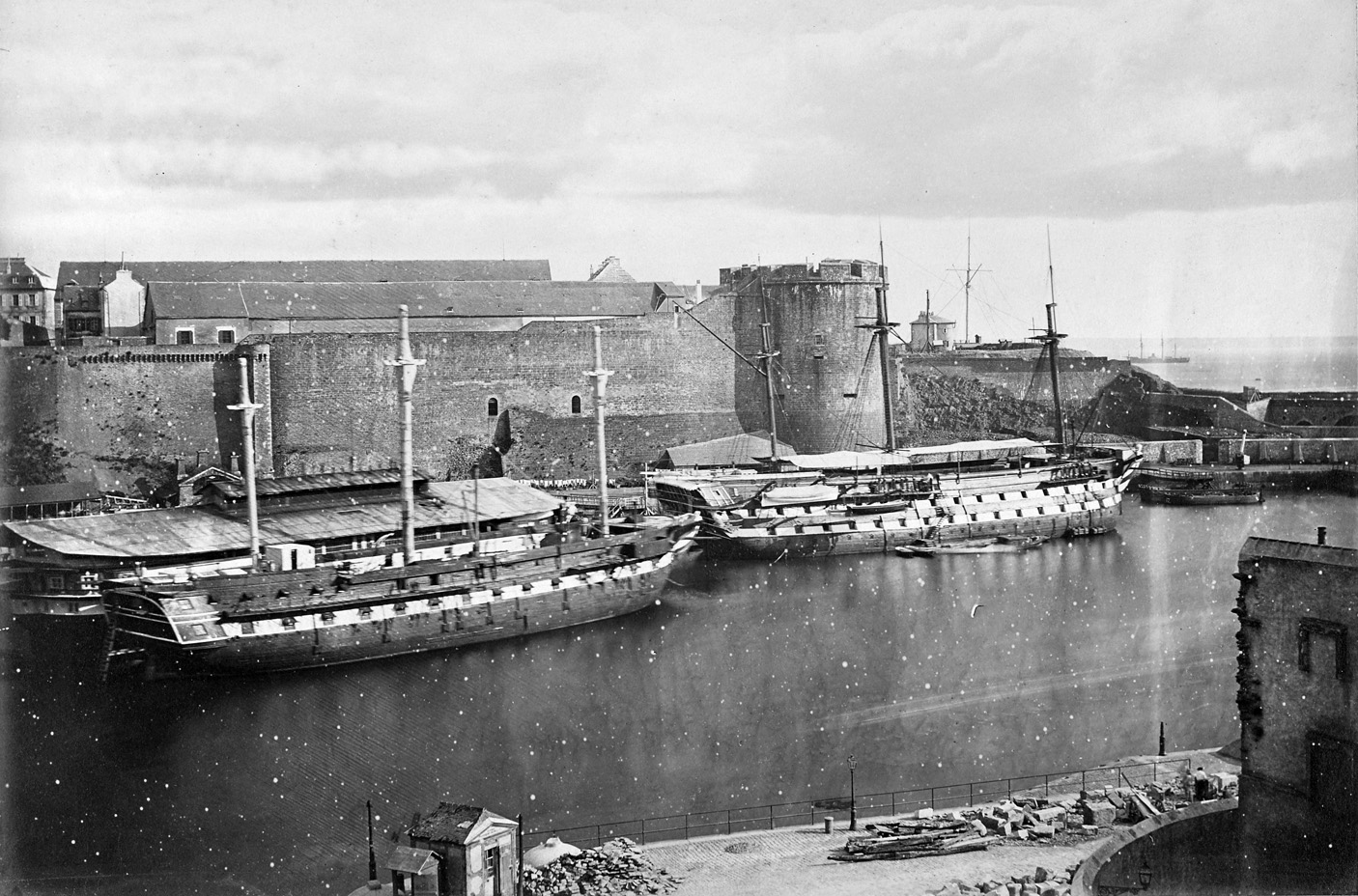
Virginie (French sail 2nd rank frigate, Artémise class) on the left laid up at Brest, probably as a transport before she was struck and converted to a provisions hulk in 1881. The two-decker ahead of her may be the training ship Jean Bart, ex Donawerth (steam, 90 guns). See the 1786-1861 book pages 111-112. (Photo: Wikimedia from Musée Bretagne FLMjo273055)
Junon
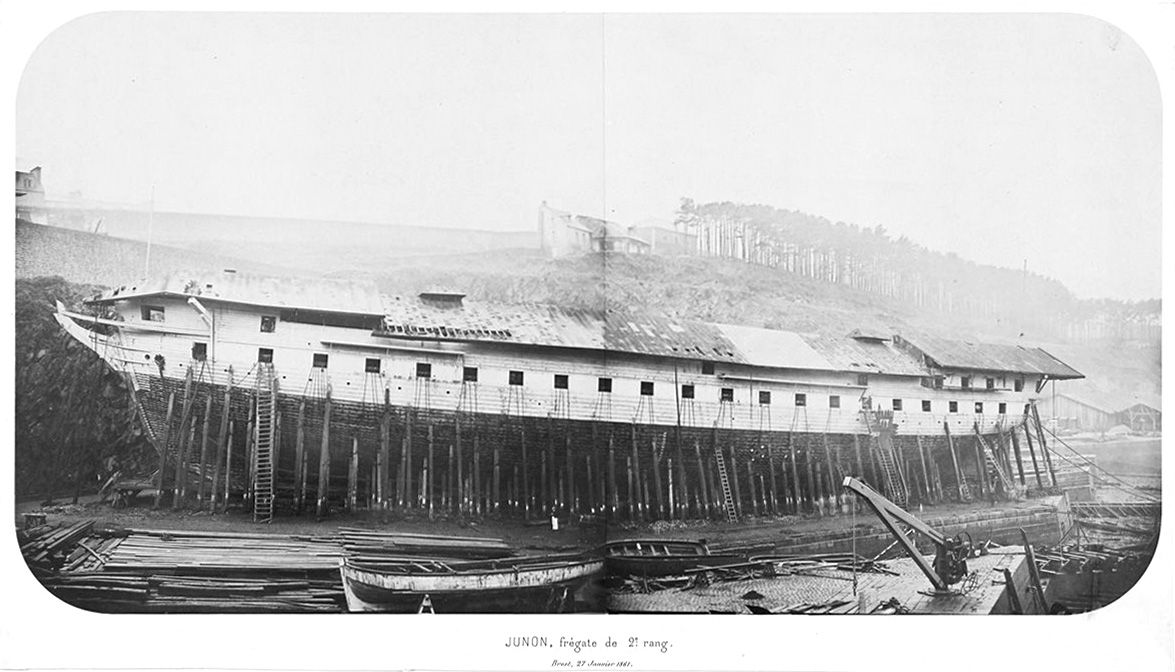
Junon (French steam 2nd rank frigate, Hermione class) on the ways at Brest on 27 January 1861 one day before her launching. Originally a near sister to Virginie, she was one of nine frigates selected in 1858 for conversion to steam with powerful engines. This panoramic photo was taken by the Atelier photographique de l'arsenal de Brest. (Photo: Wikimedia from Musée NM Brest 2009-2-169-a-0313-H)
Thémis
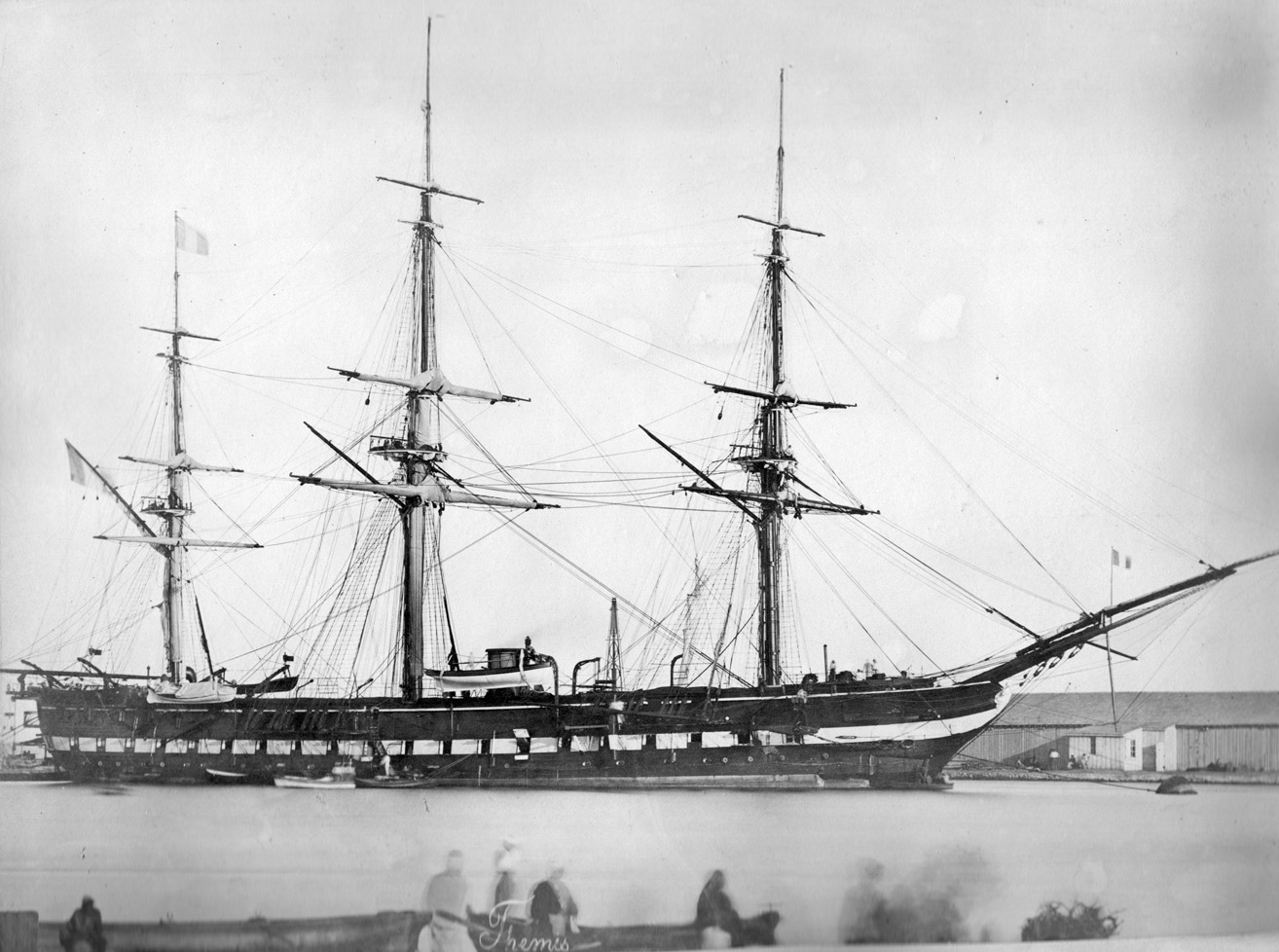
Thémis (French steam 2nd rank frigate, Magicienne class). Begun in 1847, this ship was another of the nine selected in 1858 for conversion to steam with powerful engines. She completed conversion in 1862. (Photo: USN NHHC Photo Archive NH-74985 from ONI album of French warships)
Clorinde
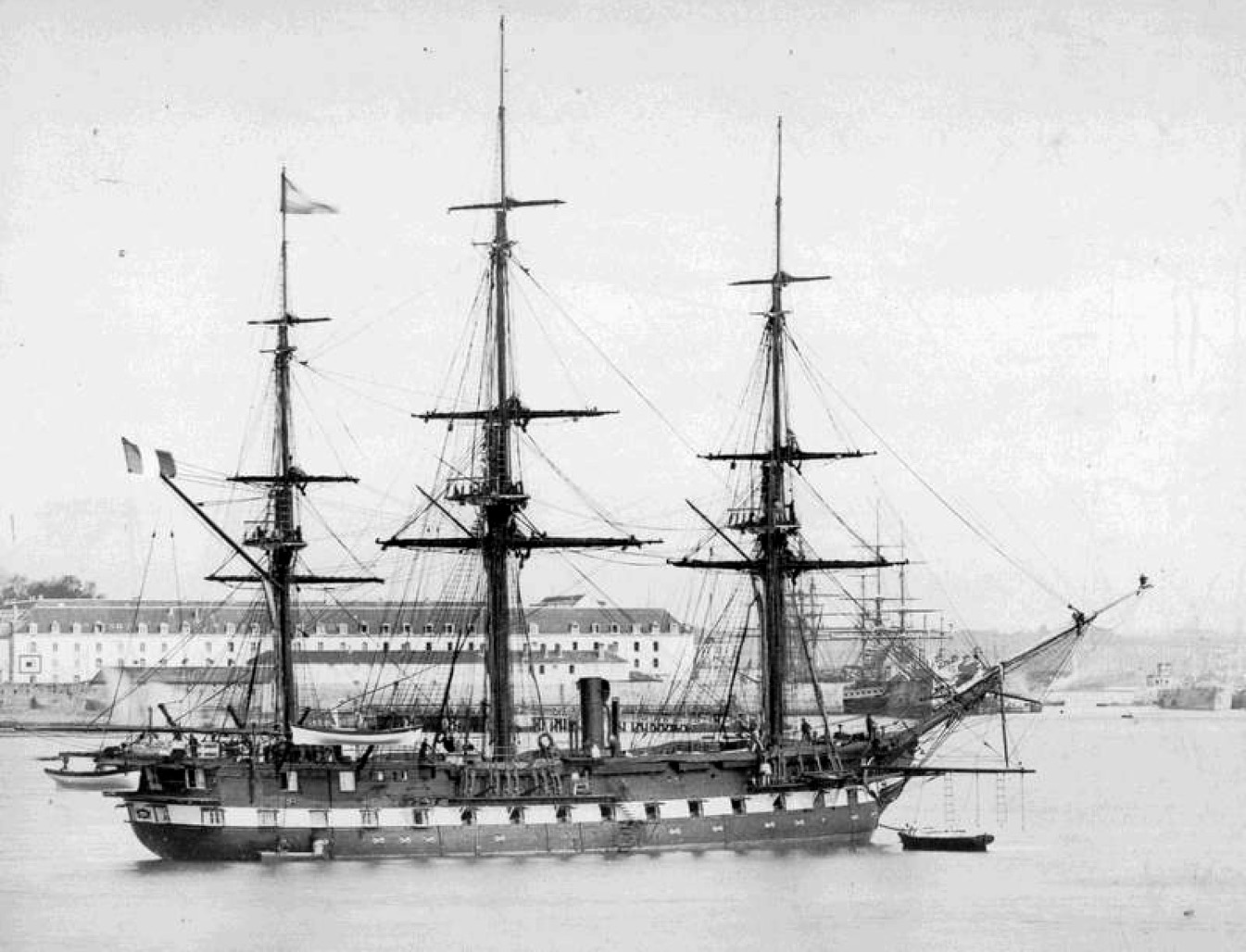
Clorinde (French steam 3rd rank frigate). She received small steam engines in 1861. (Photo: Private digital collection)
Corvettes
Favorite
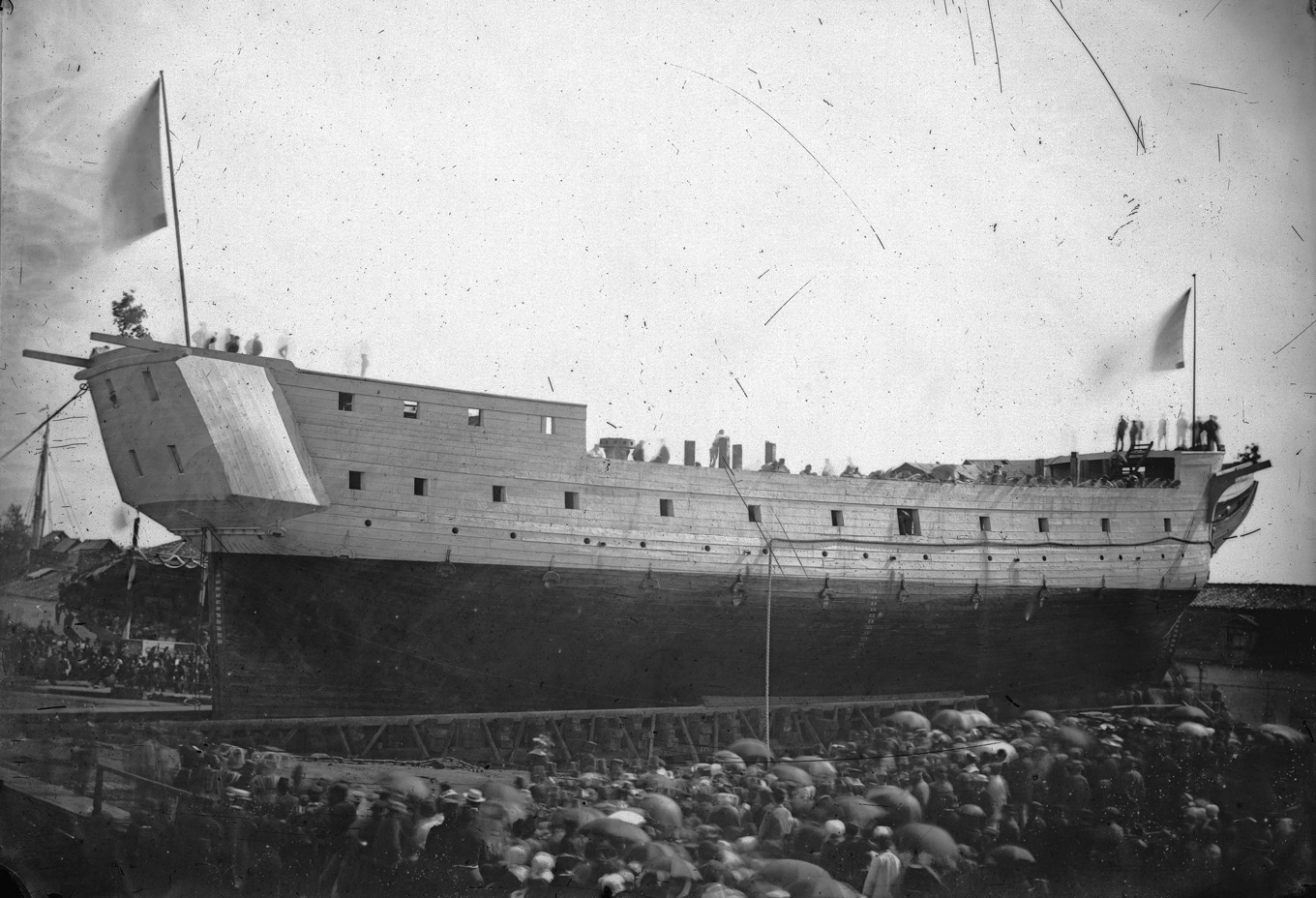
Favorite (French sail 1st class corvette) just before launching as a transport on 14 May 1870. Laid down in 1849, she was first commissioned in 1878 as a corvette and became a sail training ship. See the 1786-1861 book pages 193-194. (Photo: Wikimedia from SHD Rochefort MR-5-G-1100)
Cornélie
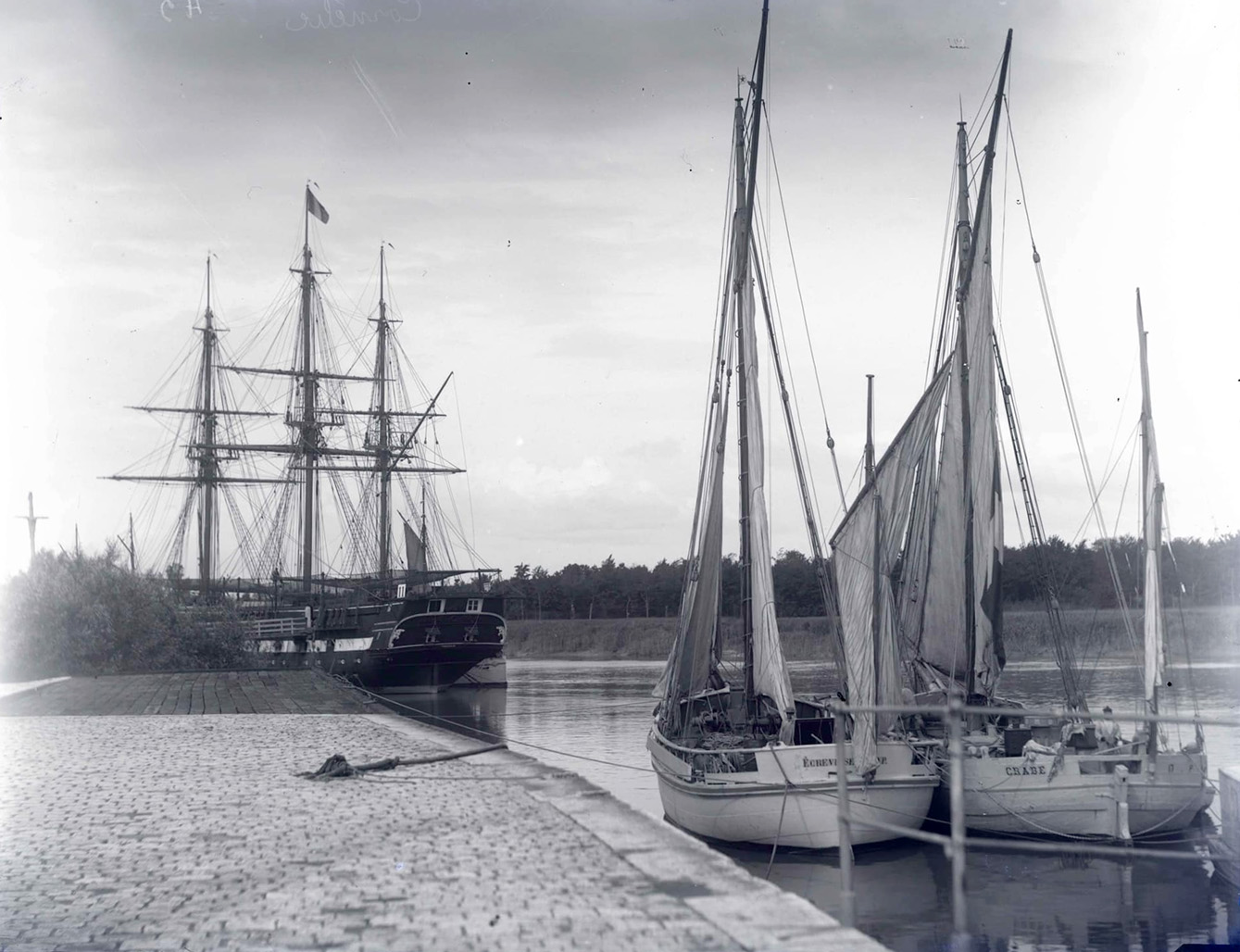
Cornélie (French sail 1st class corvette) at Rochefort serving as Bâtiment amiral with two port service craft in the foreground, the gabare (lighter) Écrevisse ("Crayfish," built in 1884) and the older bugalet (Breton coaster) Crabe. See the 1786-1861 book pages 193-194. (Photo: Private digital collection and Wikimedia from SHD Rochefort MR-5-G-145)
Galathée
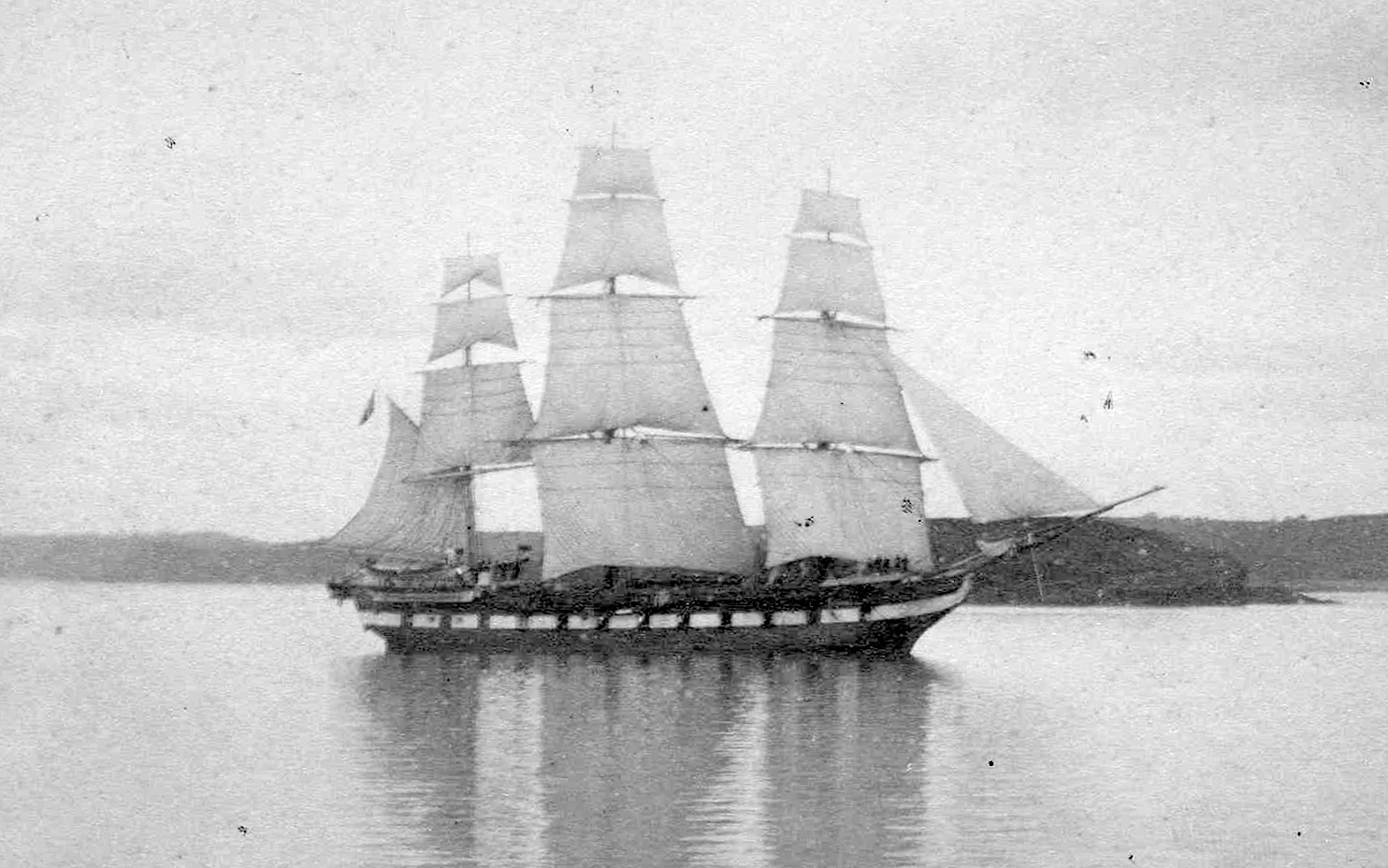
Galathée (French sail 1st class corvette) as a sail training ship at Brest. Listed as annexe to Borda, École des aspirants, to 1877, then annexe to Bretagne, École des novices, to 1892. Photo by Émile Mage. See the 1786-1861 book page 193. (Photo: Wikimedia from Archives M&M Brest 2fi02193)
Phlégéton
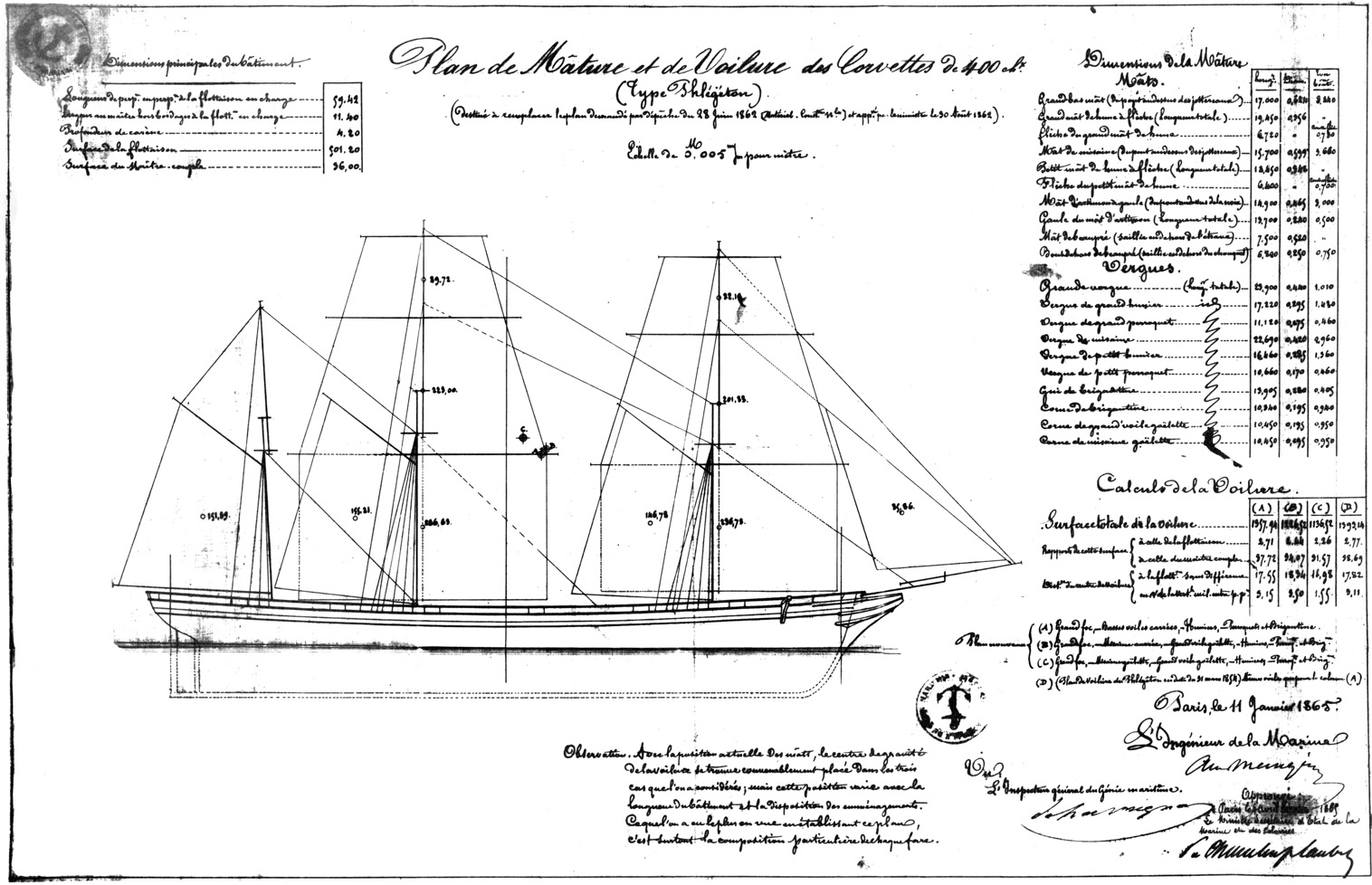
Phlégéton (French steam corvette, open battery). This class followed the experimental Roland (launched in 1850) and in 1855 was adopted as France's definitive form of screw corvette. The three ships of the class initially carried four to six heavy 30pdr smoothbores and two to four heavy 22cm shell guns, all on the open upper deck. This modified mast and sail plan dated 11 January 1865 was approved on 4 April 1865. (Plan: Archives de la Marine, 8-DD1-18 no. 27 )
Du Chayla
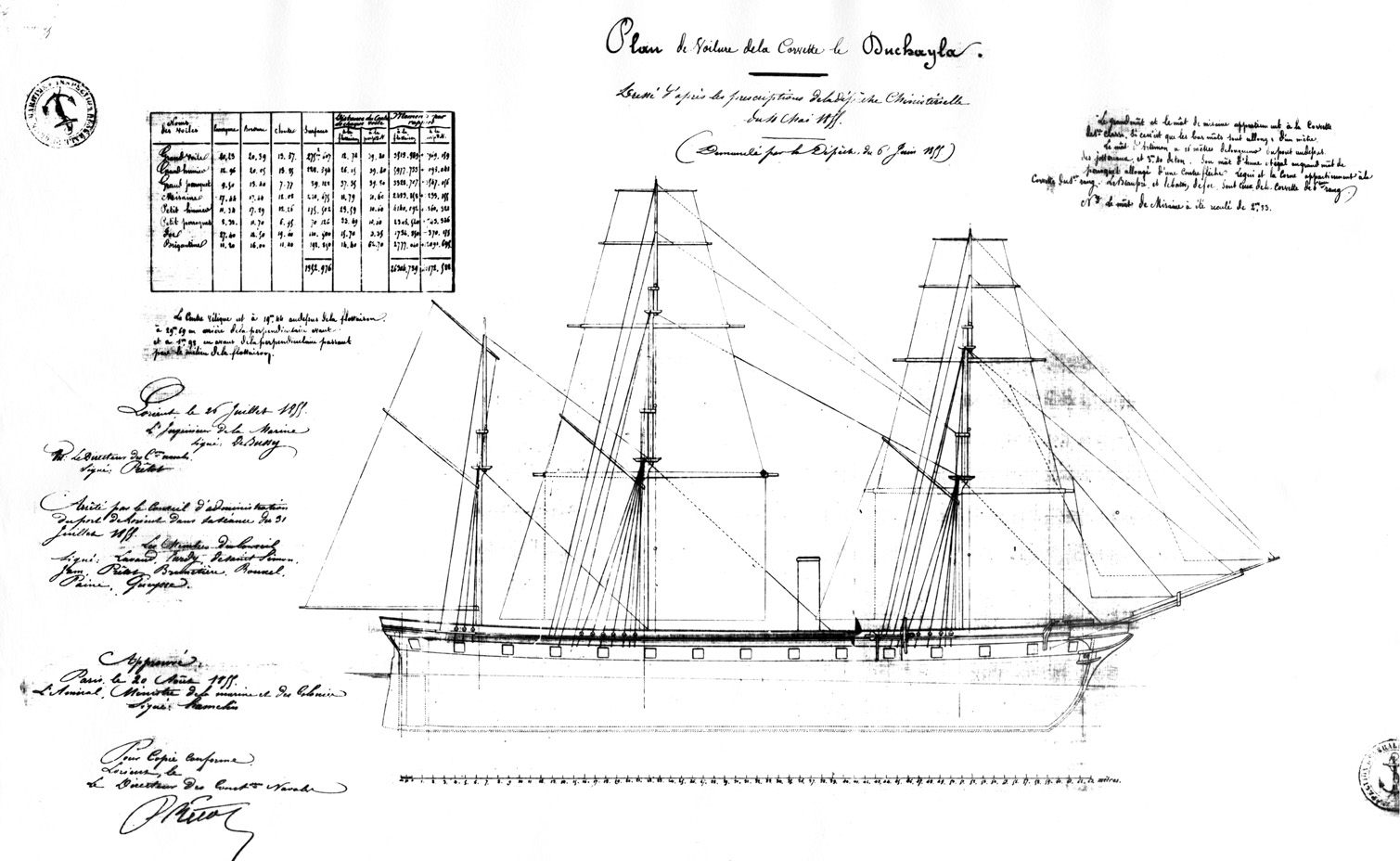
Du Chayla (French steam corvette, covered battery). In 1851 the Navy's technical advisory committee rejected the Phlégéton type as essentially a large avisos and proposed instead a real fighting ship with a covered battery with a heavy armament (initally twelve medium 30pdrs and two medium 22cm shell guns plus two 30pdrs on deck) and machinery entirely below the waterline. In 1855 this type was rejected for future screw corvettes because of a new preference for fewer but larger guns. This sail plan dated 26 July 1855 was approved on 20 August 1855. (Plan: Archives de la Marine, 8-DD1-18 no. 26)
Brigs and Avisos
Nisus
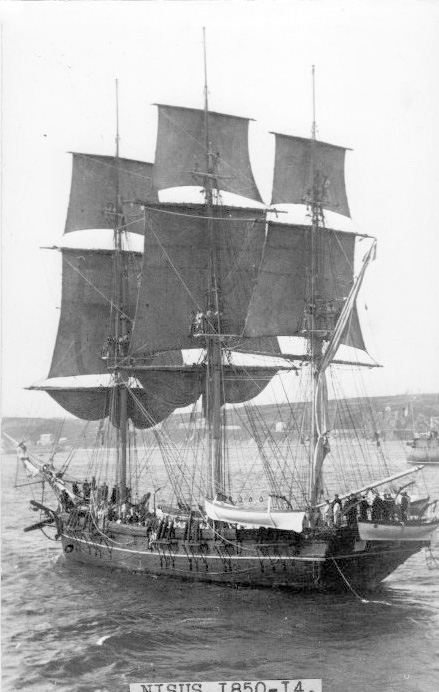
Nisus (French sail 1st class brig), launched in 1859, as re-rigged with 3 masts as a training ship at Brest ca. 1864. She was listed as annexe, École des élèves/aspirants to 1873, annexe de l'Austerlitz, École des mousses 1875-1894, annexe de la Bretagne, École des mousses 1894-1913, and annexe de l'Armorique, École des mousses, 1913-14. See the 1786-1861 book pages 231-233. (Photo: Shipscribe collection)
Janus
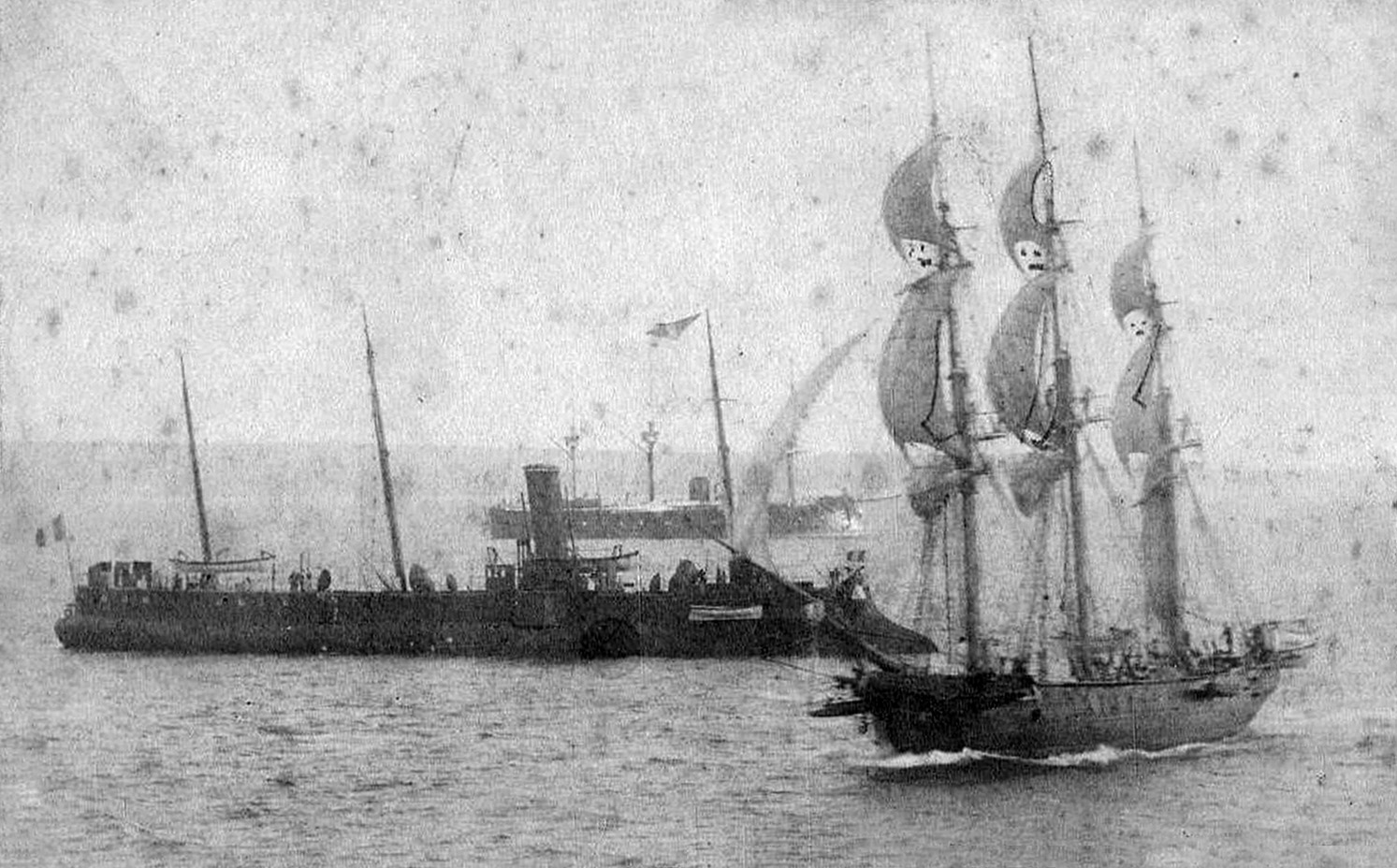
Janus (French sail 1st class brig), completed in 1860, as re-rigged with 3 masts as a training ship at Brest in 1881-82. She was listed as École des élèves, annexe du Borda 1883-1897. She is shown under sail as a Naval Academy training ship in the Brest roadstead in 1889 with the torpedo cruiser Condor and the ironclad Océan of the Escadre du Nord in the background. See the 1786-1861 book pages 231-233. (Photo: Shipscribe collection)
Forfait
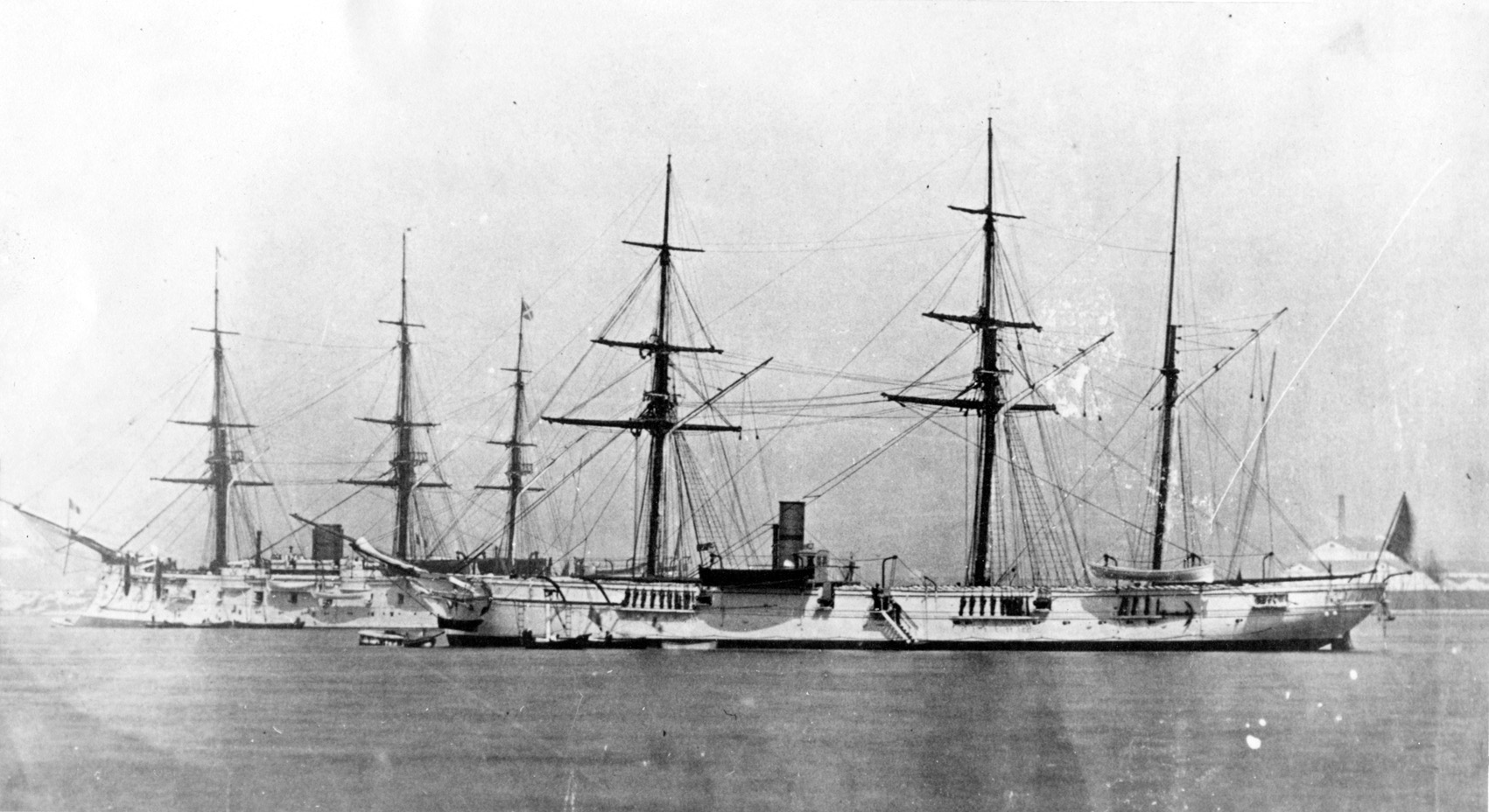
Forfait (French steam 1st class aviso). Her design was based on that of the 2nd class corvette Chaptal of 1845, but although she ended up being larger than the old ship a fleet reorganization in 1852 reassigned her type to fleet duties as avisos, which required relatively high speed and good endurance. The latter was supplied in part by a substantial barque rig. She is seen here with the ironclad Océan. (Photo: Shipscribe collection)
Latouche-Tréville
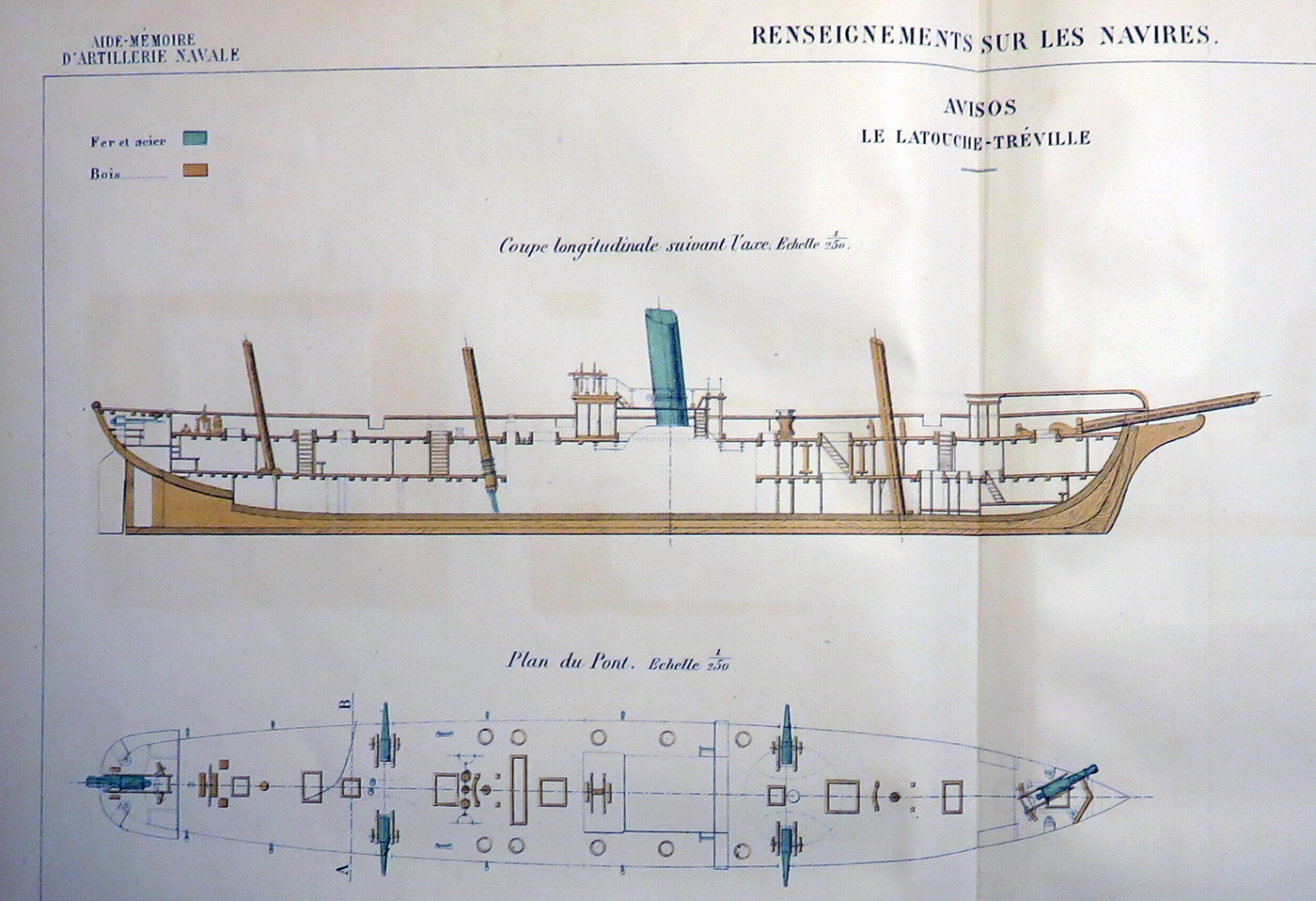
Latouche-Tréville (French steam 2nd class aviso). This type of aviso was built following the 1852 fleet reorganization for service on foreign stations with a full sail rig, auxiliary steam propulsion, and a few guns. This ship had two 14cm guns firing to the sides and two rifled bronze 12pdrs firing forward and aft. The similar Lamotte-Picquet was a little longer, although of less displacement, and carried four 14cm guns. Color code: blue-green = iron, brown = wood. (Plan: Aide-Mémoire d'Artillerie Navale, 1879)
Transports
Calvados
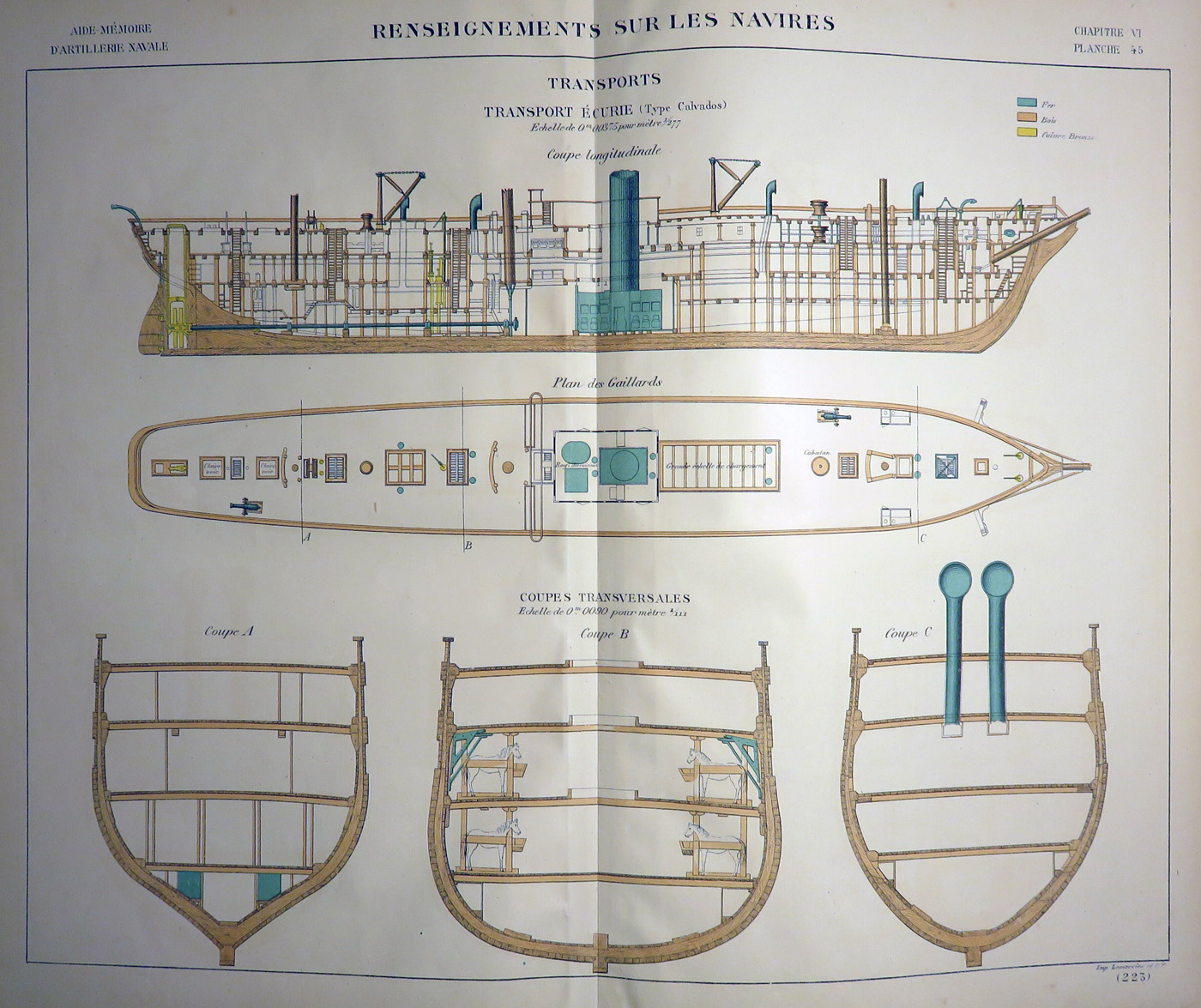
Calvados (French horse transport). This design, which carried 300 horses and their soldiers, was approved in 1856. Horses in their stalls are shown on one of the cross sections. There was a complete system of ventilation for both men and animals. Her armament consisted of two 14cm guns on block carriages on the upper deck. Color code: blue-green = iron, yellow-orange = copper and bronze, brown = wood. (Plan: Aide-Mémoire d'Artillerie Navale, 1879)
Marne
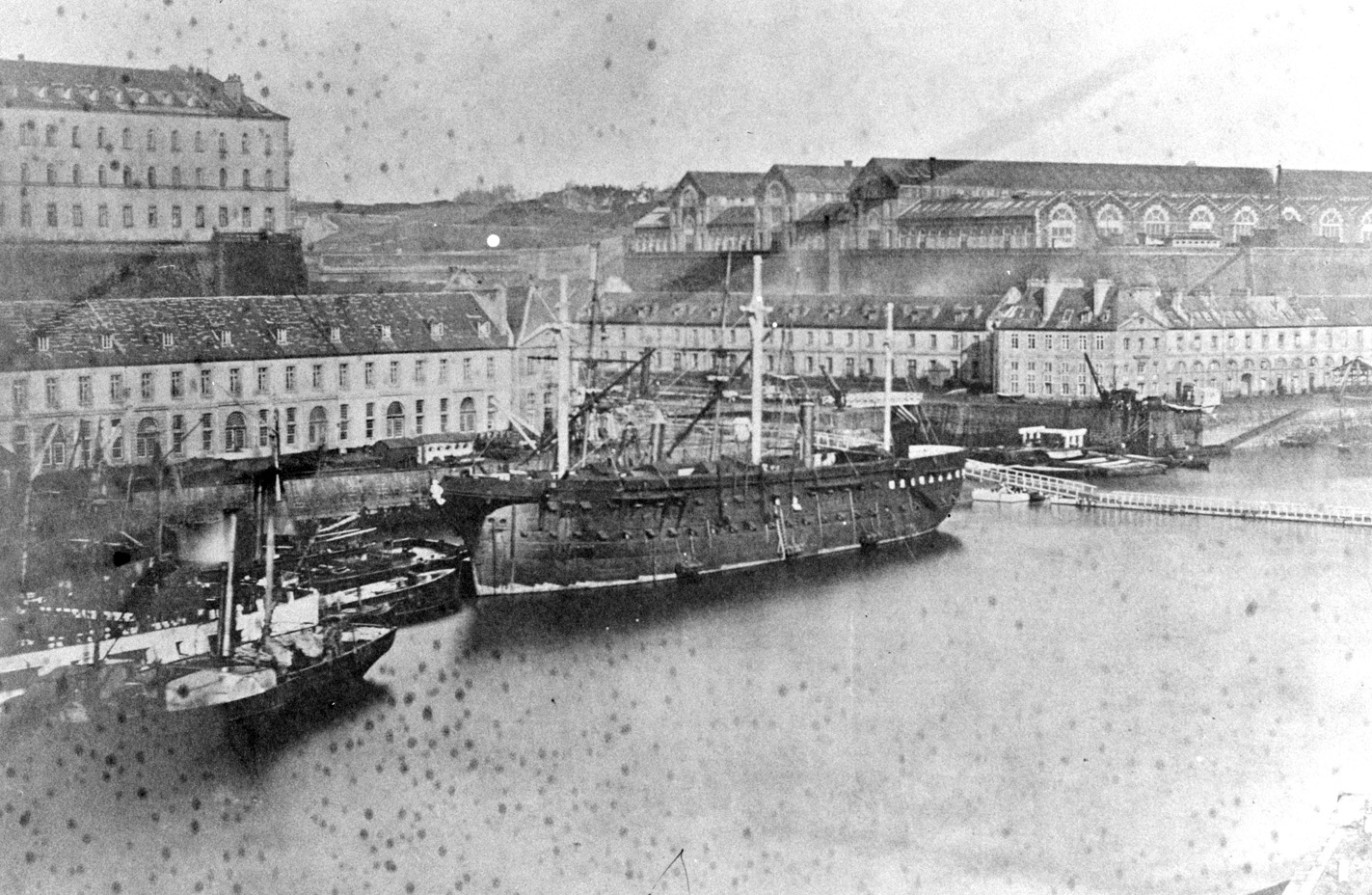
Marne (French auxiliary steam transport) as a hulk at Brest. She was listed as a Caserne at Brest in 1878-1891. Note that the funnel of this low-powered ship is aft of the mainmast. (Photo: USN NHHC Photo Archive NH-75904)
Yonne
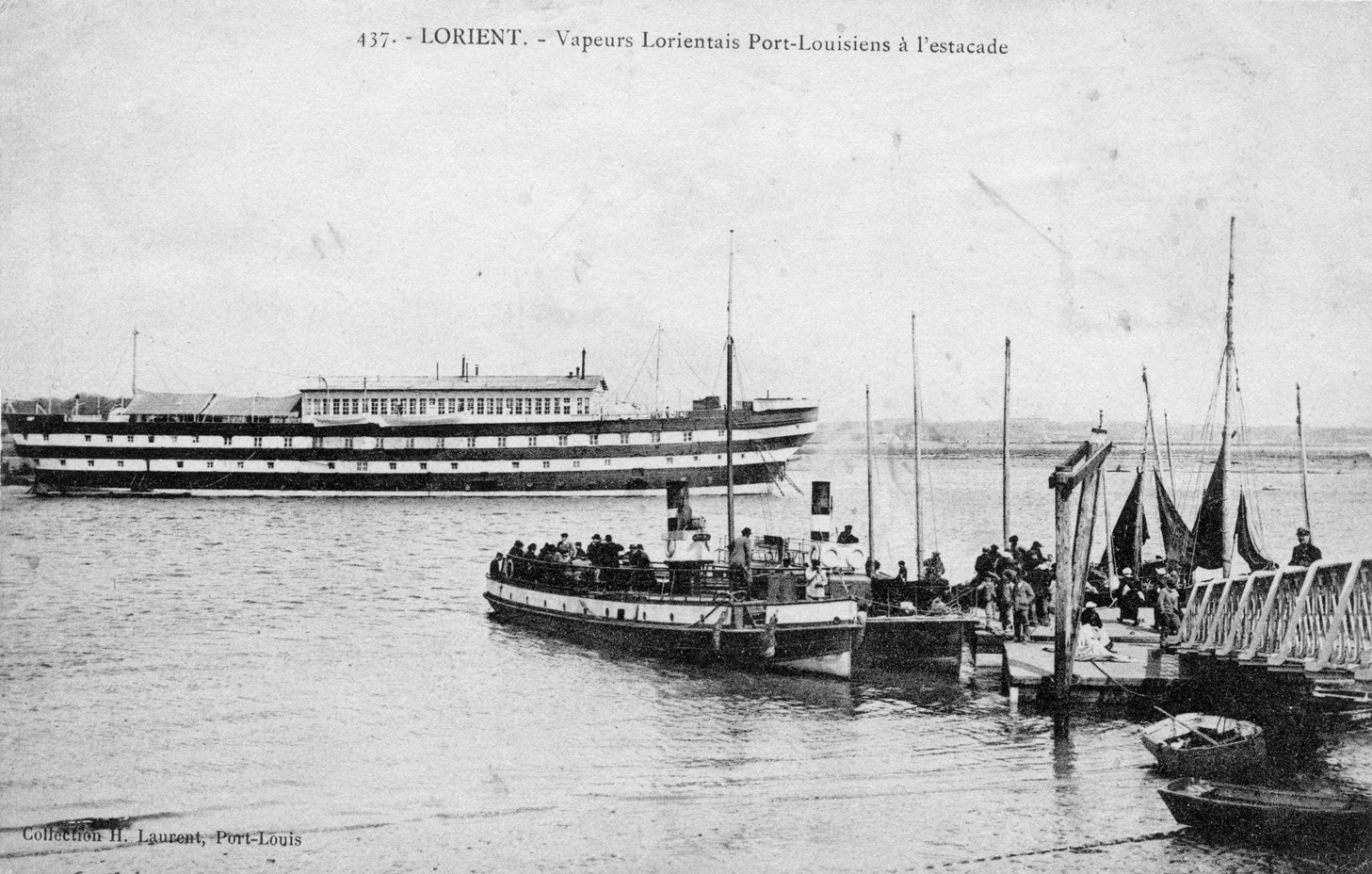
Yonne (French auxiliary steam transport) as a hulk at Lorient. She was listed as a Ponton caserne at Lorient in 1885-94, then as Bâtiment central de la défense mobile (replacing Bouledogue) to 1905, Service central de la 2e flottille de torpilleurs de l'Océan to 1912, and then Service central des torpilleurs de Lorient. (Photo: Postcard by H. Laurent, Port-Louis)
Ariège
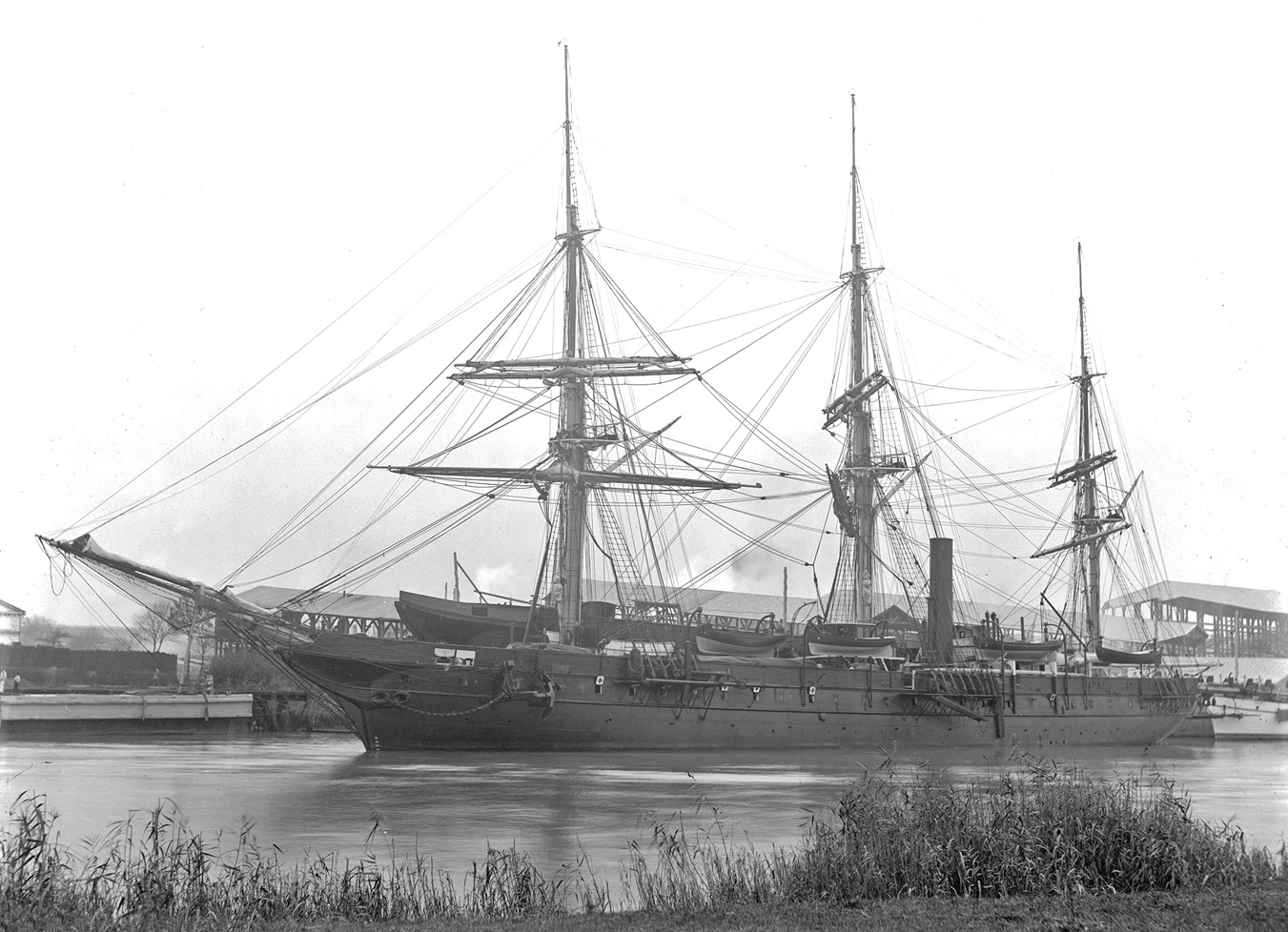
Ariège (French auxiliary steam transport, iron hull), at Rochefort probably after her reconstruction at Lorient in 1873. (Photo: Private digital collection and Wikimedia from SHD Rochefort MR-5-G-1)